
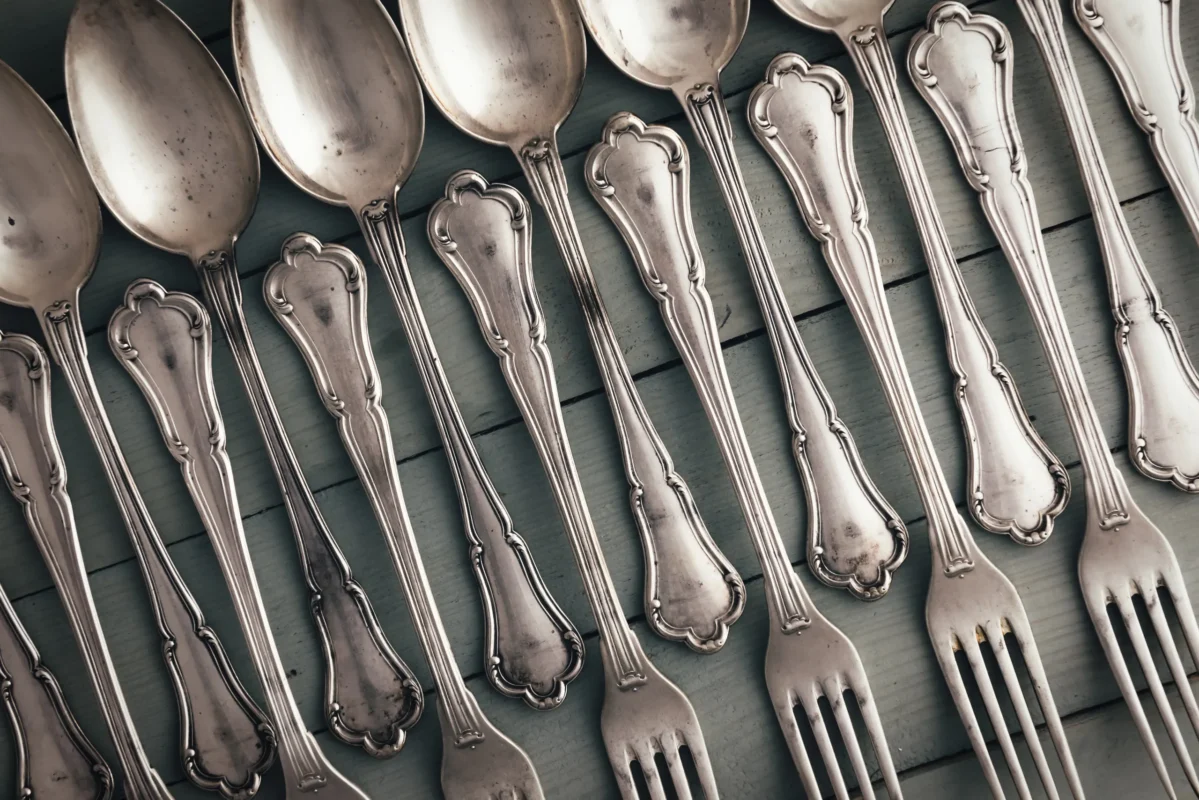
Thinking of selling inherited silverware and tableware you no longer use?
Inherited pieces can be sterling or silver-plated, and hallmarks, maker, pattern, completeness, and family history may all provide useful context. For sterling silverware purchased for melting, the key consideration is generally the amount of sterling silver by weight rather than the value of each fork, spoon, or serving piece as a separate collectible. Common mistakes when selling inherited sterling silverware often start with rushing, separating a set, polishing pieces, or assuming individual designs will determine the offer before their details and weight are understood.
It’s reasonable to want a clear answer before parting with a family heirloom. This checklist can help you identify and organize the pieces, understand that a sterling silverware offer is generally based on silver content and weight for melting rather than individual-piece value, avoid rushed decisions, and prepare for an in-person evaluation. At NY Gold & Silver, you can get a free, no-obligation evaluation and offer. Here’s what to look for before you decide, and what to expect during a transparent, face-to-face evaluation.
Common Mistakes When Selling Inherited Sterling Silverware
Sorting a family heirloom can bring up practical questions and memories at the same time. Before deciding what to sell, make an inventory, keep related pieces together, and give family members time to share what they know. Remember that sterling silverware is commonly evaluated as material to be melted, with the offer based largely on sterling content and weight rather than treating every piece as a separate retail item. The common mistakes when selling inherited sterling silverware often begin with treating a mixed collection as one uniform set or expecting the individual-piece design to determine the offer.
A drawer may hold sterling pieces alongside silver-plated items, or serving pieces that don’t match the place settings. Don’t assume every fork, spoon, or serving utensil is made from the same material or has the same significance. For pieces that qualify as sterling, the purchase is generally based on recoverable silver content and weight for melting, not on each utensil being sold as an individual piece. NY Gold & Silver buys sterling silver, not silver-plated items.
Mistaking appearance or a single mark for proof
Shine, tarnish, weight, and design can offer clues, but appearance alone can’t establish silver content. Sterling silver is generally 92.5% silver, and marks such as “925” or “Sterling” may indicate that standard. Marks like “EPNS” or “Silver Plate” indicate plating. A stamp can also identify a maker rather than the metal, so don’t treat one mark as proof for every item or assume that an attractive design will make an individual piece more valuable when the sterlingware is being purchased for melting by weight.
Make a note of the visible marks and where they appear. A magnet or another at-home check shouldn’t be treated as a definitive identification. Keep uncertain pieces together and bring them in for an in-person evaluation to help determine what they are and how much qualifying sterling silver weight is present for a melt-based offer.
How to Identify Inherited Sterling Silverware Before Selling
A simple inventory makes the collection easier to understand and helps prevent items from being overlooked. It also helps separate sterling from silver plate and gives a clearer picture of the total sterling silver weight that may be considered for melting. The common mistakes when selling inherited sterling silverware become practical steps you can avoid:
- Sort by type. Group forks and spoons, serving pieces, and holloware separately. Holloware includes items such as bowls, trays, and teapots.
- Inspect the marks. Check handles and the undersides of pieces for stamps or other wording.
Read marks without treating them as a final verdict
Look closely at the back or underside of each item, and copy the exact wording you see, such as “925,” “Sterling,” or a maker’s name. Sterling silver is generally 92.5% silver, as described by the U.S. Geological Survey on Sterling Silver. A mark is a useful clue, not proof that every piece in a group has the same composition. Worn, unclear, or absent marks call for an assessment, not guesswork. Once qualifying pieces are identified, their sterling content and weight are central to a melt-based purchase rather than treating the maker, pattern, or each individual utensil as the primary source of value.
Record maker, pattern, pieces, and condition
Keep a short list for each group: maker or pattern if visible, number of forks and spoons, serving pieces, and any holloware. Don’t worry about polishing the silverware while preparing your notes. The inventory helps organize the collection, while the evaluation determines which pieces are sterling and the amount of weight relevant to a melt-based offer.
Identification and potential sale value are separate questions. Your notes organize what you have; an in-person evaluation can help determine the material, calculate the relevant sterling weight, and assess the pieces for a purchase based primarily on melt value rather than individual-piece retail value.
Remember – if you can’t find marks, or simply want help identifying your pieces, evaluations at NY Gold & Silver are always free, with no obligation to sell.
A Practical Checklist for Preparing Inherited Sterling Silverware
Keep preparation simple. The goal is to preserve the pieces as they are, make it easier for family members to see what belongs together, and organize the collection so the sterling content and total weight can be evaluated for melting. One of the common mistakes when selling inherited sterling silverware is altering or splitting up a collection before its details have been discussed, then assuming separated pieces will be valued individually.
Make a shared decision before accepting an offer
Inherited silver can carry sentimental meaning as well as material value. Record which relatives have an interest in the collection, then discuss whether anyone wants to keep particular pieces or needs more time to decide. A family photo or written note can help absent relatives understand what’s included, without making the decision for them. This is especially important when the remaining sterling silverware is being considered for a melt-based purchase by weight rather than as individually sold heirlooms.
Keep the two questions separate: what the pieces are, and whether the family is ready to sell them. Neither concern cancels out the other. A clear inventory gives everyone a shared starting point, helps establish which items may contribute sterling weight, and prevents a rushed decision during an evaluation.
Once your family is ready, bring the silverware to our Carmel, NY storefront. The evaluation can help identify qualifying sterling and the weight used to determine a melt-based offer.
Bringing Sterling Silverware to NY Gold & Silver
Once you’ve sorted the inherited pieces and gathered what your family knows about them, an in-person evaluation can help clarify what you have. NY Gold & Silver evaluates sterling silverware at its physical Carmel location, with a free, no-obligation evaluation. Because the silverware is generally purchased for melting, the offer focuses on qualifying sterling content and weight rather than assigning a separate retail value to each fork, spoon, or serving piece. Transactions take place in person, so bring the silverware to a storefront for examination.
Understand what the evaluation does and does not provide
The evaluation is verbal, not a formal written appraisal. It gives you a chance to learn more about the items and consider an offer without an obligation to sell. The process is focused on clear information, transparency, and customer service, including explaining the sterling content and weight relevant to a melt-based purchase, so you can make a decision at your own pace.
If you choose to accept the offer, payment is made by check on the spot. A valid state-issued ID or driver’s license is required for payment. Knowing these steps ahead of your visit can help you and your family feel prepared.
Frequently Asked Questions
Can I sell inherited sterling silverware if the set is incomplete?
Yes. Bring an incomplete or mismatched group to NY Gold & Silver for an in-person evaluation. Group related items, such as matching teaspoons and serving pieces, and share any family details you know. Each item may need to be identified separately to determine which pieces are sterling, but the purchase is generally based on the qualifying silver content and total weight for melting rather than on selling each piece individually.
Does NY Gold & Silver provide a written appraisal for inherited silverware?
No. NY Gold & Silver provides a free, no-obligation verbal evaluation, not a formal written appraisal. A verbal offer explains what the company is willing to pay for the sterling silverware being evaluated, generally based on qualifying silver content and weight for melting rather than individual-piece retail value, but it isn’t documentation for insurance or estate purposes. If you need a formal document for those purposes, don’t treat the verbal evaluation as a substitute.
Do I need an appointment to bring inherited sterling silverware to NY Gold & Silver?
No appointment is required. Walk-ins are welcome at our location in Carmel, NY. An inventory can be helpful, but it isn’t required.
What identification do I need to receive payment for sterling silverware?
Bring a valid state-issued ID or driver’s license to receive payment. First, the silverware is evaluated and a verbal offer is presented based on the qualifying sterling content and weight relevant to melting. If you accept the offer, NY Gold & Silver pays by check on the spot. Payment is made after acceptance. If another family member will handle the transaction, make sure the person receiving payment has the required identification.
